


Are you struggling to lace up for your runs or craving variety in your training regimen? It might be time to incorporate some cross-training into your marathon training. It can keep you engaged in your training plan and offer gains that you can’t necessarily achieve on the pavement.
Why should runners cross-train?
Runners have a long-standing belief that running, and running only, will help them achieve their goals on race day. While running should be the main modality for training, it doesn’t need to be the only thing you do. Because every runner’s body responds differently to training, fatigue, and recovery, cross-training can be a great way to actively recover as you prepare for your next run. However, not all cross-training is created equal, and understanding when and how you should bike or strength train is vital for your marathon performance. Here are six ways you can safely cross-train before your next race.
Cross-training workouts for runners
Strength training
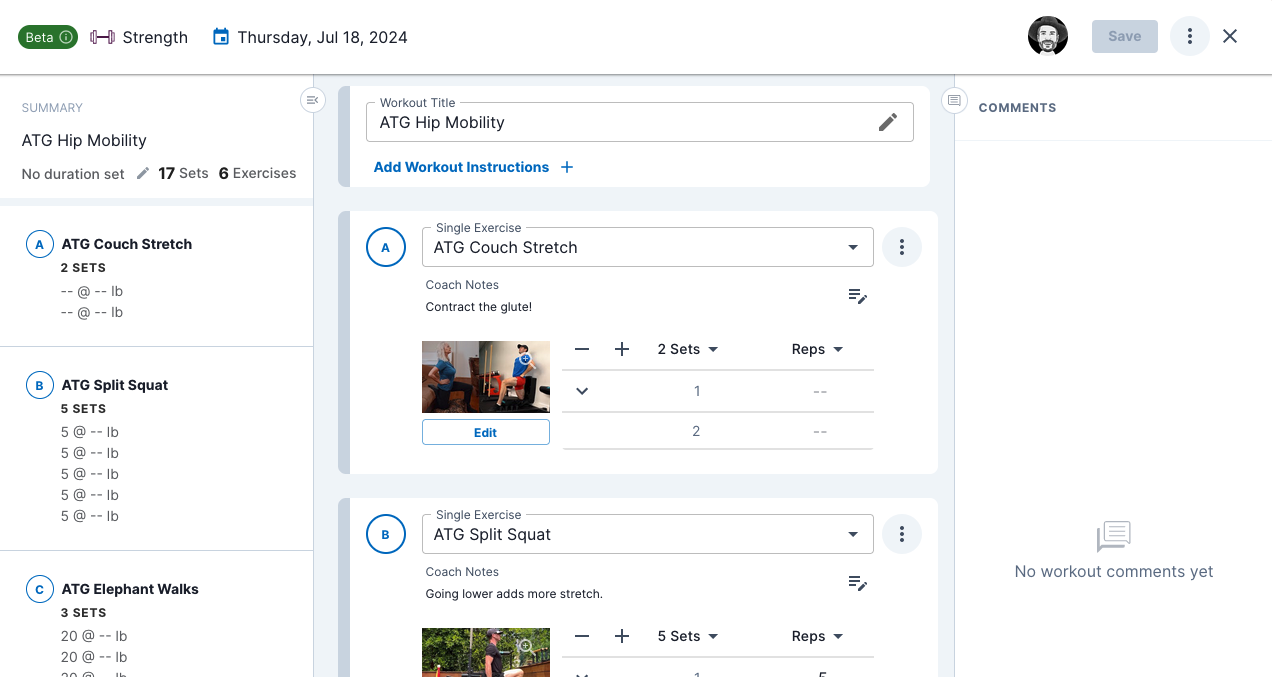
If you’re looking for to improve your chances of having a breakthrough race, strength training should be #1 on your list. Simply put, strength training is injury prevention and a workout all in one. Incorporating a running strength program into your routine will allow you to build run-specific strength that may be lacking or showing up as poor form, persistent pain, or a lack of mobility.
Strength training can be low impact, high intensity, or restorative depending on the exercise and load, so how hard you go should be dictated by where you are in your race build-up. Consult a coach to pinpoint exactly what that means for you.
Training Tip → Use the Strength Workout Builder to add strength sessions to your TrainingPeaks calendar alongside your marathon training. Learn how to add and adjust strength exercises here.
Cycling
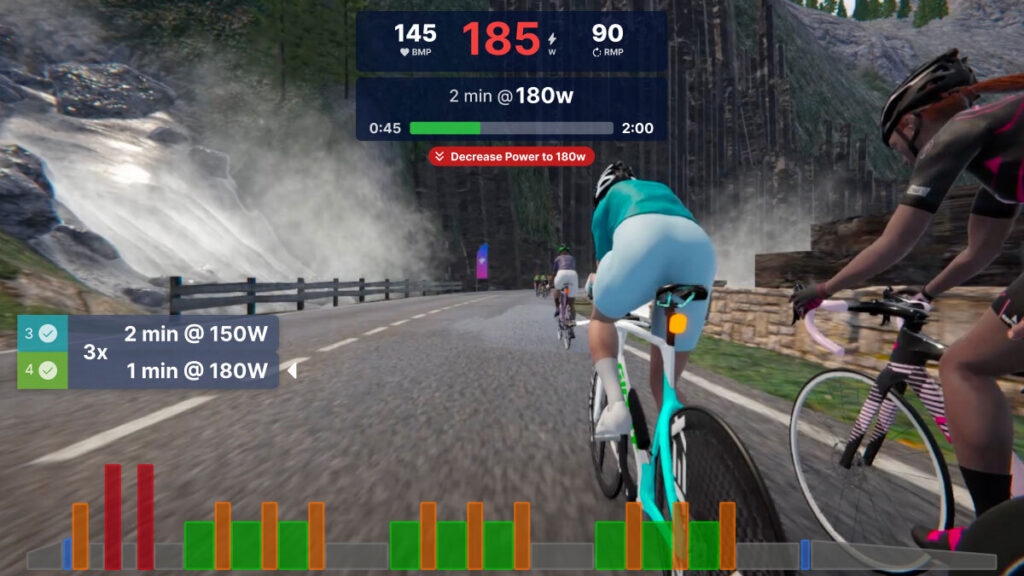
Cyclists, runners, and skiers have some of the highest VO2 max of all aerobic athletes, which is why cycling is #2 on my list as one of the best cross-training workouts for runners. Cycling allows you to build strength in your legs, hold a high heart rate for a long period of time, and minimize forceful impact on your legs.
If you are looking to exchange a run with a bike workout, follow the 1.5x rule. For example, if you’re planning on a 40-minute run, you need to ride 60 minutes at a similar intensity. At the end of the day, however, there is no direct replacement for running and speed work; if you’re going swap in cycling workouts, you should replace your easy aerobic days or recovery runs.
Training Tip → If you have access to an indoor cycling setup, connect it to TrainingPeaks Virtual so your indoor cycling data syncs to your TrainingPeaks account. With GPXplore, you can ride any route in the world, any time. Bonus: It’s free with a Premium subscription!
Swimming
Swimming is a total body activity with a huge aerobic component that puts minimal stress on the body. It’s a great tool to use after a race or hard workout, or even as a simple mid-week recovery session. While swimming is not going to build running-specific adaptations, it will help you focus on your breathing, improve your understanding of form and symmetry, and give you an equivalent aerobic workout so you can show up the next day recovered and ready to run.
Swimming is a freebie in my book—you really can’t overdo it if you keep your swimming workouts around 60-90 minutes per week (e.g., up to two or three 30-minute sessions weekly).

Aqua jogging
This is often regarded as the most run-specific type of cross-training, and I frequently prescribe this to my athletes who are most likely to get injured. Aqua jogging is best done in the deep end of the pool with a waist belt floaty to help prop you up higher in the water. Using the resistance of the water and running as if you were on dry land removes all the lower leg impact you’d receive on your run.
While similar to running, aqua jogging does not equate to the same level of aerobic impact as a normal run—your hardest aqua jog probably won’t register above Zone 3. Therefore, don’t use aqua jogging to replace a run; instead, use it as a restorative activity. Aqua jogging is a great way to improve your symmetry, increase range of motion, and release tension in common running areas.
Elliptical
Running on the elliptical offers minimal impact, good aerobic stimulation, and a decent full-body workout. It’s not a direct replacement for running because you don’t have the same emphasis on the push-off and mid-stance phases, but much like aqua jogging, it’s a great tool for injury prevention, mobility, and an aerobic training alternative. Use an elliptical on days when you are particularly sore or need a warm-up before strength training or yoga.
Yoga and pilates
I implement yoga and pilates into my athletes’ training programs to help with restoration, mobility, and muscular control. Athletes who are frequently injured usually don’t understand how tight or bound up they are after a run. Yoga and pilates demand muscular control to hold positions, which translates to better form when running. I like to program this at the end of a tough workout or later in the day after a long run to prevent losing range of motion and mobility.
Both yoga and pilates can help engage the sympathetic nervous system, which can help you sleep better, relax, and minimize stress. There is also a small strength component that can be beneficial to runners. Keep in mind that extensive or excessive amounts of yoga or pilates can lead to lower muscle tension, which can diminish power output; use yoga and pilates sparingly during times when you have a great deal of speedwork.
Other sports
Downhill skiing, rock climbing, and dancing are great ways to move your body. They don’t provide restoration or marathon-specific preparation, but they are a fun way to switch it up! Just don’t give up other cross-training activities or any of your runs for these types of workouts.
Cross-training can help you move through a patch of injury or boredom without upsetting your whole training regimen, just don’t overdo it (stick with around two cross-training sessions per week). Use cross-training as another tool in your training arsenal while pushing towards your marathon goals.


