


Northern Hemisphere dwellers may be excited for “an extra hour” of sleep this weekend, but the reality of daylight saving time is much more complicated. Read on to learn why we started changing the clocks in the first place and why your health could be at risk.
The background of daylight saving
Daylight saving was first envisioned in jest by Benjamin Franklin in 1784, when he suggested waking up earlier in the summer to minimize candle consumption. Since then, scientists and politicians have argued that aligning our time to longer days would result in less energy use.
In 1916, Germany and the Austro-Hungarian Empire became the first nations to implement daylight saving time (DST), and it has been used off and on by various nations around the world since. During the energy crisis of the 1970s, DST became more widespread and permanent in Europe and North America.
Still, many question this practice and wonder whether it should be continued. Farmers are often at odds with the system, as animals and crops need care based on the sun and not the clock. Various jurisdictions in large countries like the U.S. and Canada also object, arguing clock shifts actually put local areas more out of sync with the sun depending on their location within a time zone. Most importantly, numerous studies have demonstrated that the expected energy savings have never come to pass, making the original rationale for the whole thing somewhat dubious.
Does daylight saving affect your health?
Though a one-hour change is seemingly minimal, the time change can cause some pretty dramatic impacts on our innate biological clocks, therefore affecting our sleep.
While common sense would suggest that we lose an hour of sleep in the spring and gain an hour in the fall, research has shown this isn’t the case. In the spring, sleep is quite seriously disordered, often for as long as five days, from that small change in the time. In the fall, there is a much quicker recovery time, but the notion that people gain an hour of sleep has proven to be a fallacy.
The alteration to sleep cycles in the spring can cause some significant health impacts. Research has shown that in the week following the time change, the risk of heart attack is significantly higher than in the week before. Other studies have shown increased risks of stroke, vascular problems, and clotting issues.
Other time change impacts
In addition to energy savings, proponents of daylight saving cite a reduction in motor vehicle collisions. Using DST to prolong daylight hours, they argue, would make roads safer during otherwise dark and dangerous evenings. Several studies have looked at this suggestion, and perhaps somewhat surprisingly, there is no compelling data to support it.
Among a large number of observational studies looking at the impact of the spring switch to DST on road safety, the data was inconsistent: Some studies showed a decrease in collisions, some showed an increase, and nearly half showed no change. Interestingly, in those studies that showed an increase in collisions, the researchers attributed the increase to disordered sleep patterns, but htis finding didn’t persist across other studies. No effects were recorded with the autumn time change.
One finding that really piqued my interest came from a group of nine studies that looked at the impact of DST change on different types of road users. In those studies, there were no changes in the frequency of collisions for cars; however, there were significant decreases in incidents involving pedestrians and cyclists. One of those studies reported a 36% decrease in casualties amongst pedestrians and an 11% reduction for cyclists, no doubt attributed to improved visibility. This, one could argue, is the most positive effect stemming from daylight saving.
How to lessen the effects of DST
To minimize the impact of time changes, you can employ many of the tips and tricks that travelers use to manage jet lag when crossing time zones:
- Go to sleep and wake up based on your internal clock, not the mechanical one. It may be tempting to take advantage of one more hour of being awake, but this can lead to problems.
- Practice good sleep hygiene on the night of the time change (better yet, always!). Suggestions include avoiding caffeine in the evening, minimizing distractions like phones or televisions, and avoiding working out late in the day or evening.
- Expose yourself to bright sunlight on the morning after the time change. This can help reset your internal clock.
- Try to avoid napping, unless using it to catch up from a sleep deficit.
Pro Tip → Using Recovery Insights to track your sleep in the days leading up to and after DST makes it easy to spot any changes in sleep and heart rate patterns caused by the time change.
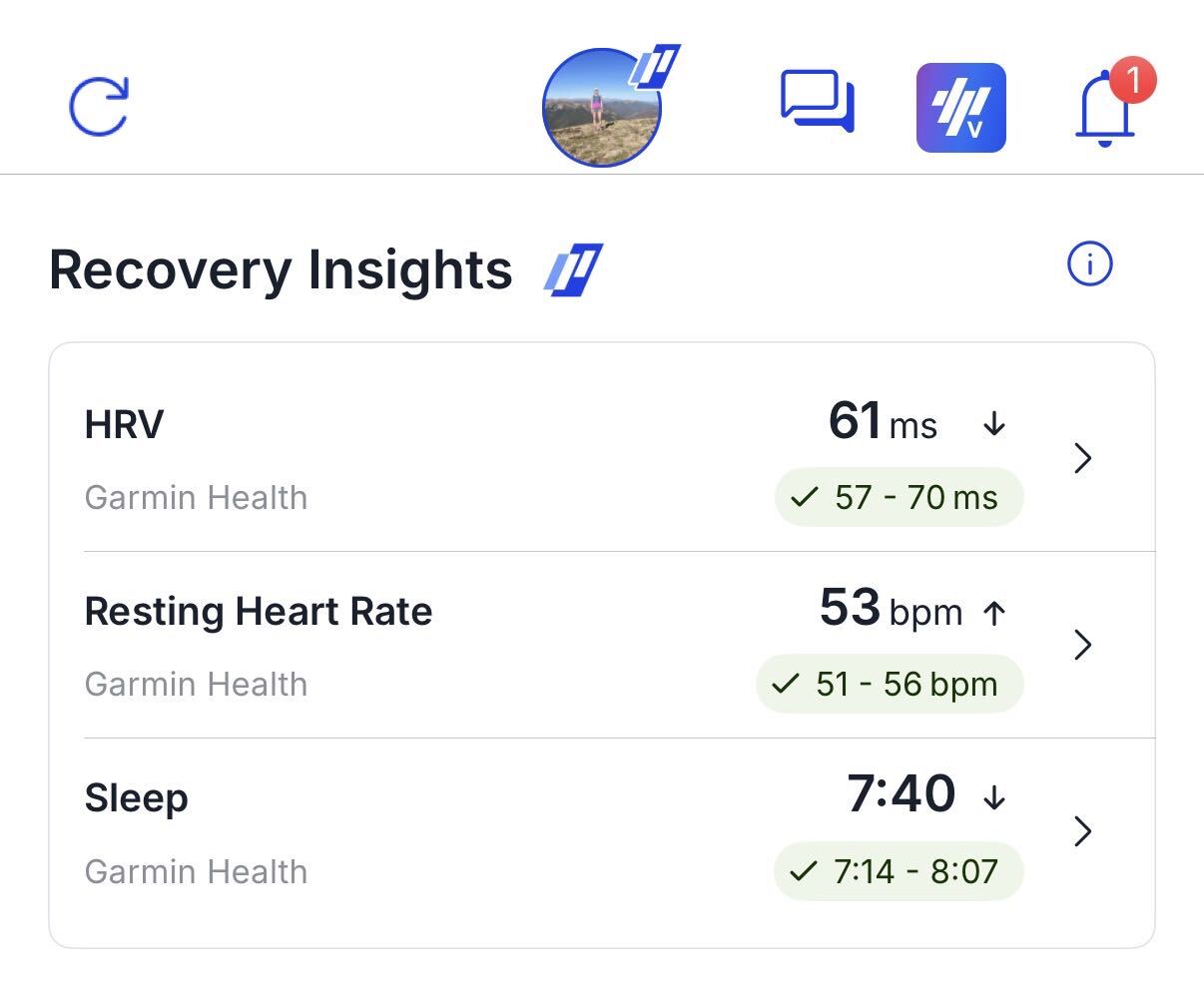
If the time change is particularly difficult for you, plan ahead. Shift your bedtime and waking hour by 20 minutes per day for the three days leading up to the time change so that, rather than a one-hour jump all at once, you will ease your body into the shift more gradually.
Despite an abundance of evidence suggests that the DST change is unhealthy and unsustainable, there remains no real political will to abandon it, though this hasn’t stopped people from trying. A group of scientists collated the data on the subject and published a paper in 2019 outlining their argument for abolishing the practice. And yet, here we are, less than a week from the fall back to standard time—yet again.
Train hard, train healthy.
References
Carey, R.N. & Sarma, K.M. (2017). Impact of daylight saving time on road traffic collision risk: A systematic review. Retrieved from https://bmjopen.bmj.com/content/bmjopen/7/6/e014319.full.pdf
Manfredini, R. et al. (2019, March 23). Daylight Saving Time and Acute Myocardial Infarction: A Meta-Analysis. Retrieved from https://www.ncbi.nlm.nih.gov/pmc/articles/PMC6463000/
Roenneberg, T. et al. (2019, June). Why Should We Abolish Daylight Saving Time? Retrieved from https://pubmed.ncbi.nlm.nih.gov/31170882/


